
Sentinel ICBMs May Need New Silos, Driving Costs Skyward

The struggling LGM-35 Sentinel ICBM program encountered yet another obstacle as recent evaluations indicate that the earlier proposal to utilize LGM-30 Minuteman III missile silos might not be practical after all.
Breaking Defense reports The U.S. Air Force is currently contemplating the building of additional missile silos designed for housing advanced intercontinental ballistic missiles (ICBMs). These ICBMs will eventually succeed the present Minuteman IIIs used by the Air Force Global Strike Command (AFGSC) starting in the 2030s. Earlier strategies aimed at significantly cutting down costs associated with this modernization effort proposed modifying the current Minuteman III silos to fit these new missiles instead of constructing entirely new facilities.
Building entirely new silos will entail significant costs, necessitating extensive digging to depths reaching or exceeding 80 feet. According to present acquisition and deployment strategies, approximately 400 functional silos would be needed. The current Minuteman III silos are grouped within missile sites spread across regions including Wyoming, North Dakota, Montana, Colorado, and Nebraska. Additionally, constructing more silos would be essential at Vandenberg Space Force Base in California for conducting test launches.
Typically, individual silos operate without personnel and are organized into clusters of ten, managed from a centralized location known as a Launch Control Center (LCC). These groups of ten silos together with their corresponding LCC form what is referred to as a flight. A missile squadron consists of five such flights. To ensure reliability, every LCC within a single squadron has the capability to oversee and manage any launch site belonging to that same squadron. Furthermore, should the LCCs become incapable of executing a launch, crew members have the option to initiate launches directly from remote locations. aboard an E-6B Mercury .
A contributing aspect hindering the reuse of silos is their advancing age, as several predict deploying Sentinel missiles within Minuteman silos might lead to several degrees of tilt To become familiar with each structure. By the time the Sentinel reaches the end of its anticipated service life, several of these silos will have reached almost a century in age.
Speaking at the Advanced Nuclear Weapons Alliance Deterrence Center on Apr. 30, General Thomas Bussiere, Commander of AFGSC, was sure to note that no final decision on this matter has yet been made: "Part of the requirements, initially – ten years ago when this program was started – was to reuse the holes, the missile holes at the launch facilities. That was believed to be more efficient, more cost effective and quicker. Shockingly enough, if we look at it now, that may not be the answer."
Inquiries are being conducted to identify possible sites on pre-existing federal lands for prospective launch installations. Should federal property be utilized, extensive discussions It will be necessary to engage with local communities and landowners to address any concerns.
The Launch Facility
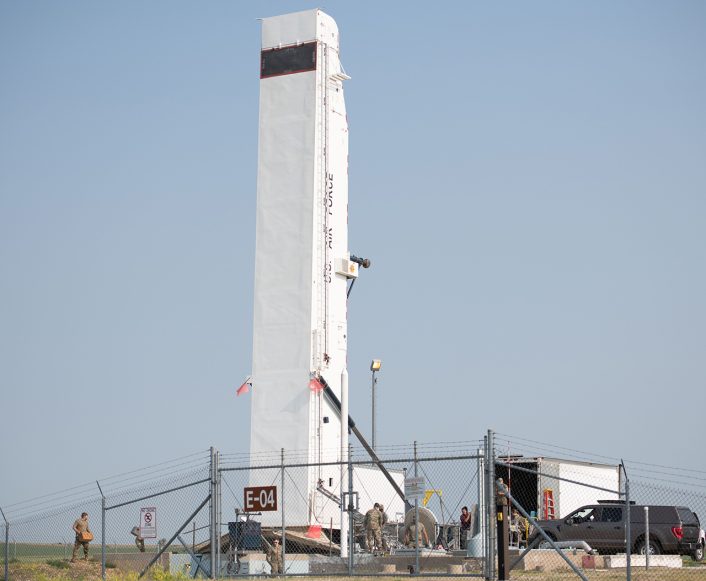
The surface-level area of a Minuteman III launch facility typically spans slightly more than one acre. When seen from the road, these facilities appear rather unremarkable—a plot of land enclosed by a chain-link fence, equipped with communication towers and surveillance gear. The missile silo is covered by a heavy, sliding hexagon-shaped hatch made of reinforced concrete, which weighs around 110 tons. In case of an actual launch, this massive cover is swiftly slid open utilizing pressurized gases.
When conducting drills where the silo door opens with a missile still inside, a truck along with its trailer is positioned precisely above the opening. The purpose of this extreme precaution is to avoid an unintended launch of the missile by ensuring it cannot rise out of the silo without sustaining substantial harm or obliteration.
From the exterior it is impossible to tell whether a silo is in fact armed or is empty. The only indicator as to a silo's status would come from the sighting of a transporter erector (TE) at a silo – a custom-built trailer designed to transport and load Minuteman III missiles into their silos. Legacy TEs were retired earlier this year In support of a more recent version, which should continue to be operational until the Minuteman III’s ultimate decommissioning. Because of the variations in weight and size, the Sentinel will probably necessitate its own distinct TE design.
To support the security and maintenance needs of these geographically separated missile facilities, AFGSC maintains one of the a few leftover squadrons of UH-1 Huey helicopters in U.S. service. These were first delivered to what was then called Strategic Air Command (SAC) in 1963.
The well-established Huey helicopters are presently being supplanted by new models. MH-139 Grey Wolf Based on the Leonardo AW139, the initial production model was handed over in August 2024, with the sixth unit arriving by January 2025. Currently, orders stand at 26 helicopters; however, additional acquisitions are anticipated in the future.
LGM-35 Sentinel
When it becomes operational, Sentinel will be the U.S. Air Force’s first new active Intercontinental Ballistic Missile (ICBM) in nearly half a century. The Minuteman III, which dates back to the 1960s version called Minuteman I and is slated for replacement, was initially deployed in 1970. Although the more recent Peacekeeper missile came into service in 1986, it was later decommissioned in 2005.
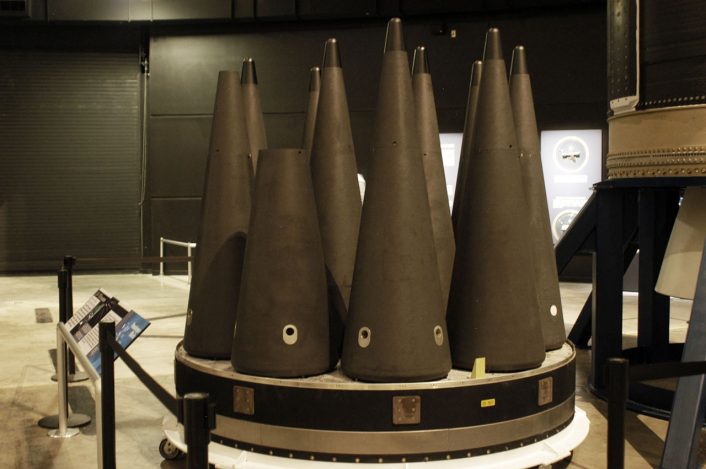
It will be bigger yet lighter compared to the Minuteman, thanks to contemporary building materials and methods. According to present nuclear strategy, each missile will bear only one nuclear warhead; however, the missile’s load capability could likely accommodate more should policy adjustments occur. Furthermore, this excess capacity might also serve to deploy dummy payloads designed to confuse or counteract enemy attempts at intercepting them.
The selected warhead for the missile is the W87 Mod 1, known to have an adaptable yield of up to 475 kilotons. The initial plutonium core—the 'heart' of the weapon—for these warheads was produced in October 2024 This marks the first newly created pit for a U.S. nuclear weapon since 1989. The NNSA aims to manufacture at least 50 plutonium pits annually by the middle of the 2030s as part of their initiative to revitalize nuclear weapons.
The escalating expenses associated with the Sentinel program have led to increased criticism. After undergoing a Nunn-McMurdy assessment due to budget overages, the Air Force projected that the overall program acquisition costs would amount to $140.9 billion. an increase of 81% Notably, this rise did not appear in a recent Congressional Budget Office assessment of U.S. expenditures on nuclear weaponry, which stated almost $1 trillion in expected costs over the next decade.
The pros and cons of procuring the Sentinel over redeveloping the existing Minuteman III The extensive evaluations have taken place both within and outside the Department of Defense; however, it's important to acknowledge that the most recent missile in this collection is currently 46 years old. Upon reaching the anticipated endpoint of Sentinel’s operational life, the youngest Minuteman III would be 97 years old.
Sustaining intercontinental ballistic missiles of this vintage has never been attempted previously; indeed, the contemporary notion of these weapons systems hasn’t existed for as long. Pursuing such a project would probably incur numerous unexpected expenses down the line. Consequently, it might be more prudent for the U.S. to address the issue sooner rather than delay further. Opting for a compromise—developing additional Minuteman III units—would likely entail comparable expenditures compared to advancing with the Sentinel program but could considerably restrict opportunities for enhancements.
The post Sentinel ICBM May Need New Launch Facilities, Increasing Expenses Further appeared first on The Aviationist .
If you liked this article and wish to remain informed, please proceed as follows: The Aviationist, please click the Follow button at the top of this page.
No comments